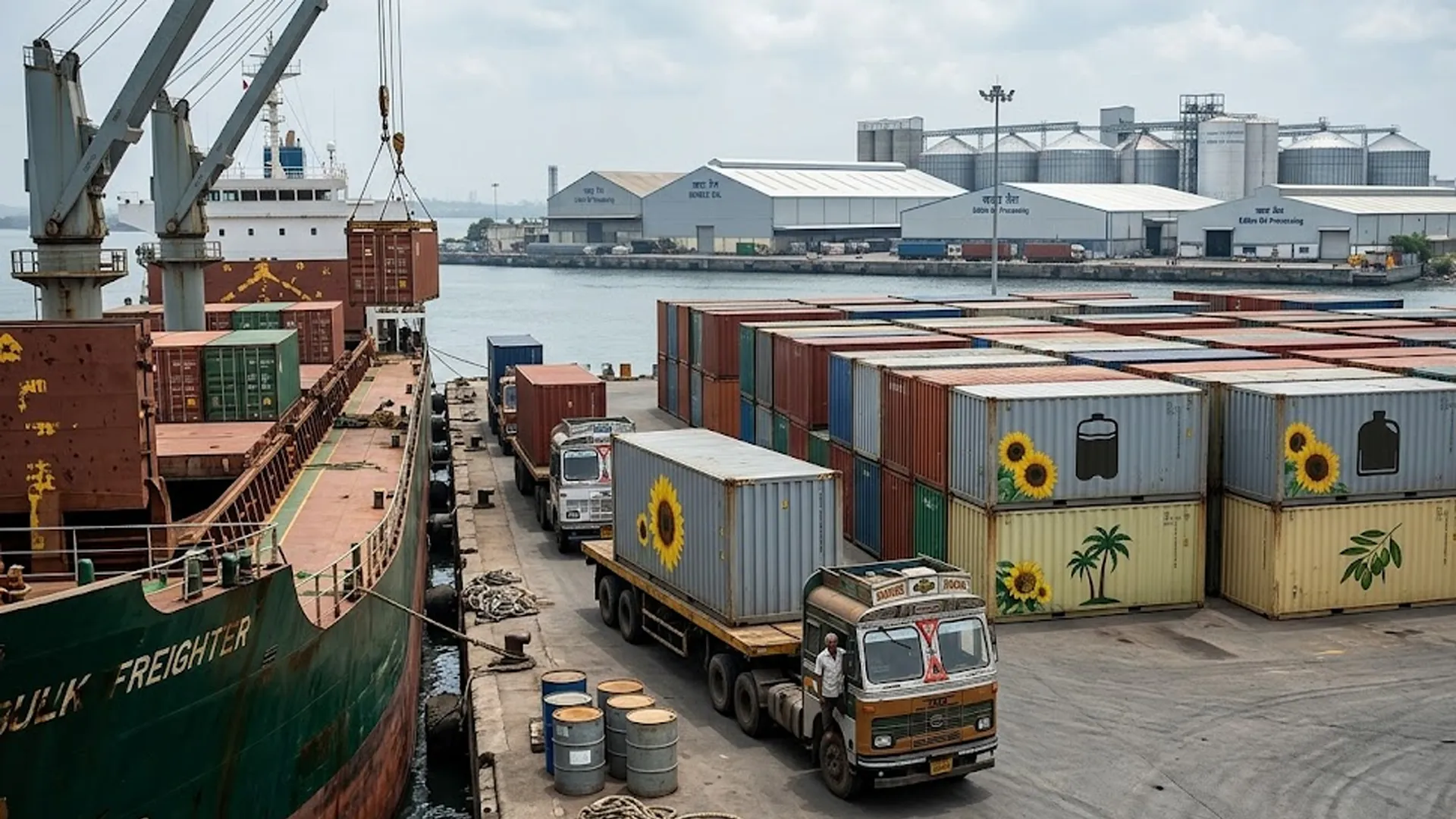
India’s Edible oil industry has urged the government to introduce urgent relief measures as the ongoing conflict in West Asia disrupts global shipping routes and sharply increases logistics costs. The Solvent Extractors’ Association of India (SEA) warned that rising freight rates and supply chain uncertainty could impact edible oil imports, domestic prices, and agricultural exports.
According to industry representatives, delays in shipping movements through critical trade routes have already begun affecting the availability and cost of imported edible oils. India, one of the world’s largest importers of palm oil, soybean oil, and sunflower oil, remains heavily dependent on international supply chains for domestic consumption.
The SEA has requested freight subsidies for edible oil shipments, priority berthing for vessels at Indian ports, and export incentives for oilmeals to reduce the financial burden on importers and exporters. Industry experts believe these steps could help stabilize supply and prevent a sharp increase in retail cooking oil prices.
The current geopolitical tensions are also creating uncertainty in the global commodities market, increasing pressure on India’s edible oil imports, agricultural exports, shipping logistics, and food supply chain. Exporters fear that prolonged disruptions may weaken India’s competitiveness in international oilmeal markets.
Analysts say the government may need to act quickly to protect consumers and businesses from inflationary pressures caused by higher freight costs. Rising transportation expenses are expected to impact not only edible oils but also several other imported commodities linked to food processing and agriculture.
With global trade routes under stress, India’s edible oil industry is closely monitoring developments while seeking immediate policy support to maintain stable supplies and affordable prices.