
China Rejects Indian Rice Shipments Amid Trade Tensions
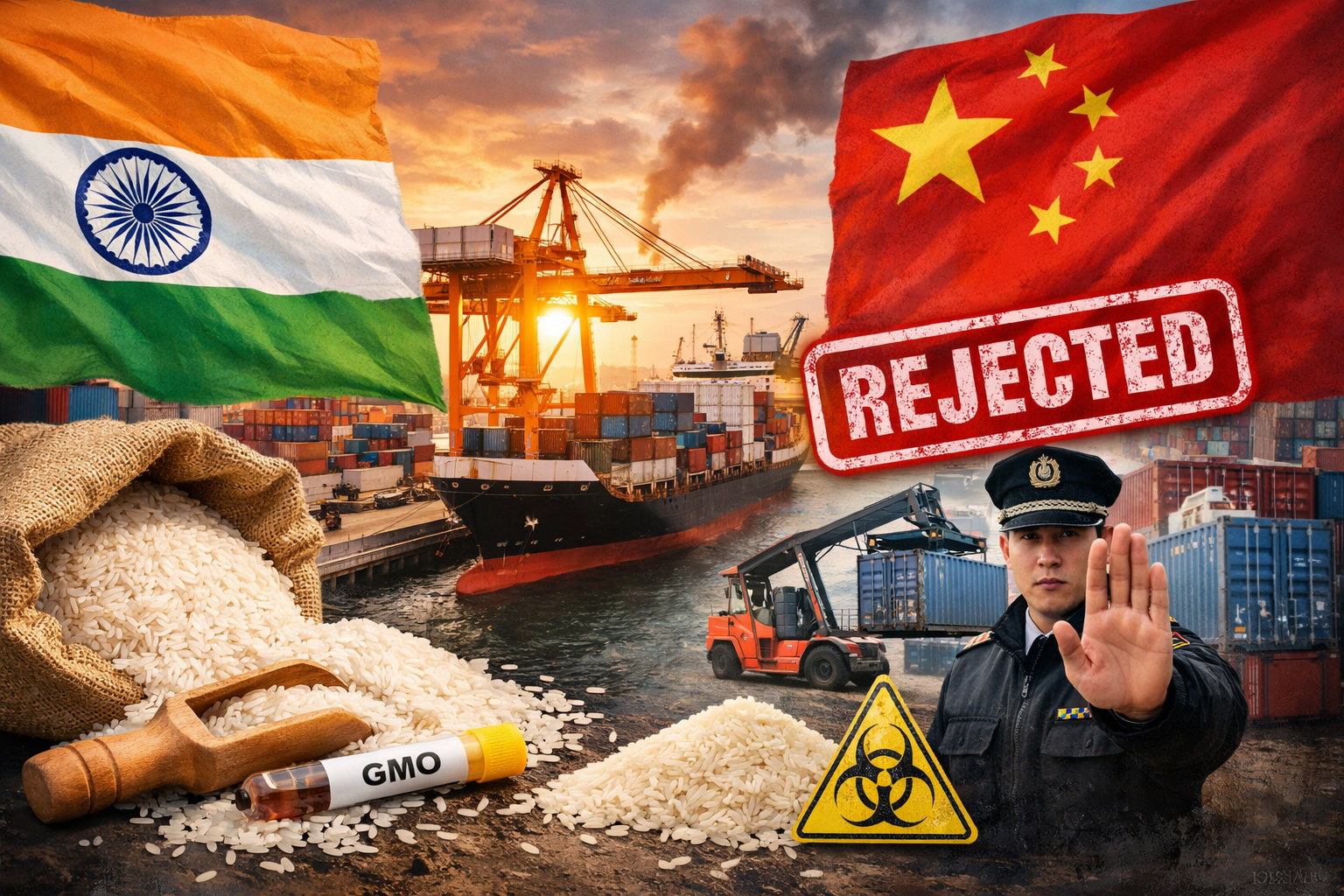
In a recent trade dispute, China rejects Indian rice shipments, citing alleged Genetically Modified Organisms (GMOs) in three consignments of non-basmati rice. The shipments had already been cleared by China’s state-owned agency, CCIC (China Certification and Inspection Group), before leaving India, raising serious questions about China’s consistency in trade practices. India, which does not permit GM food crop cultivation, except for Bt cotton, now faces a challenge in defending its non-GMO rice export credibility. The controversy comes just after India became the world’s largest rice producer, harvesting 150 million tonnes, surpassing China and creating a seismic shift in Asia’s food security landscape.
China Rejects Indian Rice Shipments: Contradictions in Trade Enforcement
China’s action highlights a glaring contradiction. While India’s ICAR formal certification was not available, allowing China a pretext for rejection, the same shipments were approved by the CCIC. Trade experts note that China demands non-GMO declarations only from India, while imports from Thailand, Vietnam, Pakistan, and Myanmar face no such scrutiny. This raises concerns that the move is more of a strategic trade tactic than a genuine food safety issue.
China’s GMO Policy and Global Implications
China itself cultivates GMO rice and has approved gene-edited rice varieties. In the past, Chinese exports to Europe have faced GMO contamination issues, revealing a double standard in China’s enforcement. Furthermore, China does not follow a Low Level Presence (LLP) policy, meaning any trace of unapproved GM material can result in shipment rejection. Experts have labeled this approach Phytosanitary Protectionism, a modern non-tariff barrier that allows China to control trade without imposing tariffs or violating WTO rules.
India’s Domestic Challenges
India’s domestic practices have also created vulnerabilities. ICAR’s CRISPR-edited rice varieties, such as Pusa DST Rice and DRR Rice 100 (Kamala), are under field trials for saline and climate-resilient cultivation. While these trials follow biosafety standards, formal non-GMO certification is still lacking. Shriram Food Industry has formally requested ICAR to issue a declaration confirming that rice grown in India is entirely non-GMO. Without this certification, China can continue to reject shipments on technical grounds.
Economic Impact
The dispute has already affected trade numbers. In 2024-25, India exported 1,80,805 tonnes of non-basmati rice to China, valued at $79.43 million. From April 2025 to January 2026, exports increased to 1,86,013 tonnes, but the value dropped to $65.59 million. Such rejections could damage India’s reputation in other sensitive markets, including the European Union, impacting broader non-GMO rice export opportunities.
Big Picture: Strategic Trade Battle
The key takeaways are:
- India overtook China in rice production, triggering a retaliatory response.
- China approved the shipments through its own agency but demanded a non-GMO declaration exclusively from India, reflecting a targeted trade strategy.
- India must address domestic gaps in certification and biosafety controls to defend its global credibility.
This is not merely a dispute over three shipments; it is a test of India’s global trade reputation, market trust, and resilience as the world’s top rice exporter. Strengthening ICAR certification, tightening field trial controls, and applying diplomatic pressure are critical to counter Phytosanitary Protectionism and ensure India’s leadership in global rice exports.