


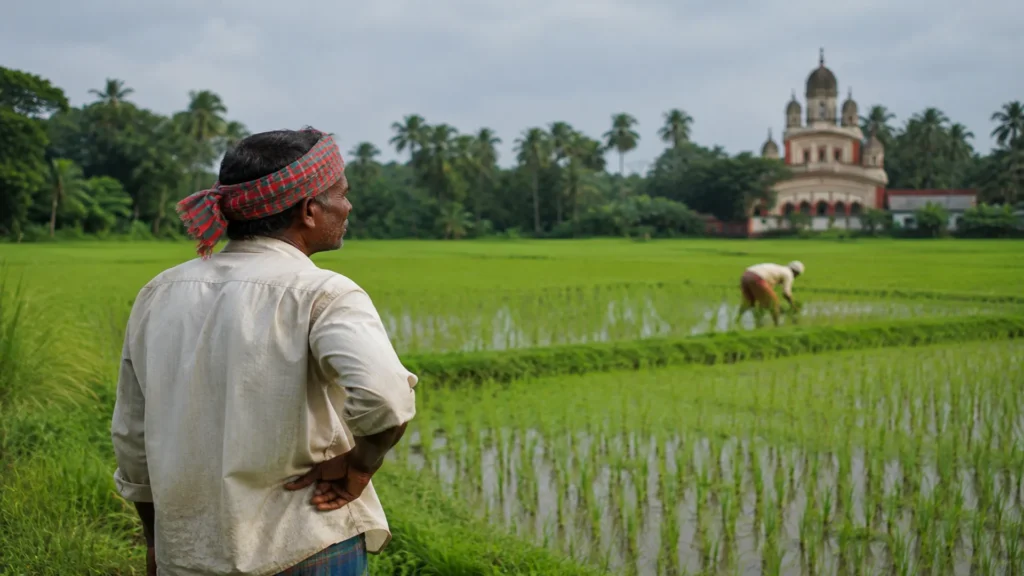
West Bengal continues to remain outside India’s Digital Agriculture Mission, under which farmers across participating states receive unique digital IDs linked to land records, crop data, and subsidy benefits through the AgriStack platform. The Centre has been actively promoting the initiative as a key step toward modernising Indian farming systems.
The Digital Agriculture Mission aims to integrate technology such as AI-based advisory systems, satellite monitoring, and real-time data analytics to improve decision-making in agriculture. It is also designed to enhance access to crop insurance, agricultural credit, and government subsidies, making farming more efficient and transparent.
However, West Bengal has not yet joined the initiative, primarily due to concerns related to data privacy, data sharing frameworks, and administrative readiness. These concerns have slowed down the state’s participation, even as several other states have already begun implementing the system.
Officials from the Centre argue that integration with AgriStack could significantly benefit farmers by offering better targeting of welfare schemes and reducing delays in subsidy distribution. The platform is also expected to improve farm productivity management through digital tracking and predictive analytics.
Experts believe that the delayed adoption of the digital farming ecosystem may limit farmers in West Bengal from accessing advanced agricultural services available in other states. They also highlight that nationwide participation is crucial for building a unified agricultural database and improving policy effectiveness.
As India pushes toward tech-driven agriculture, the gap in implementation underscores the challenges of balancing innovation with data governance concerns.