


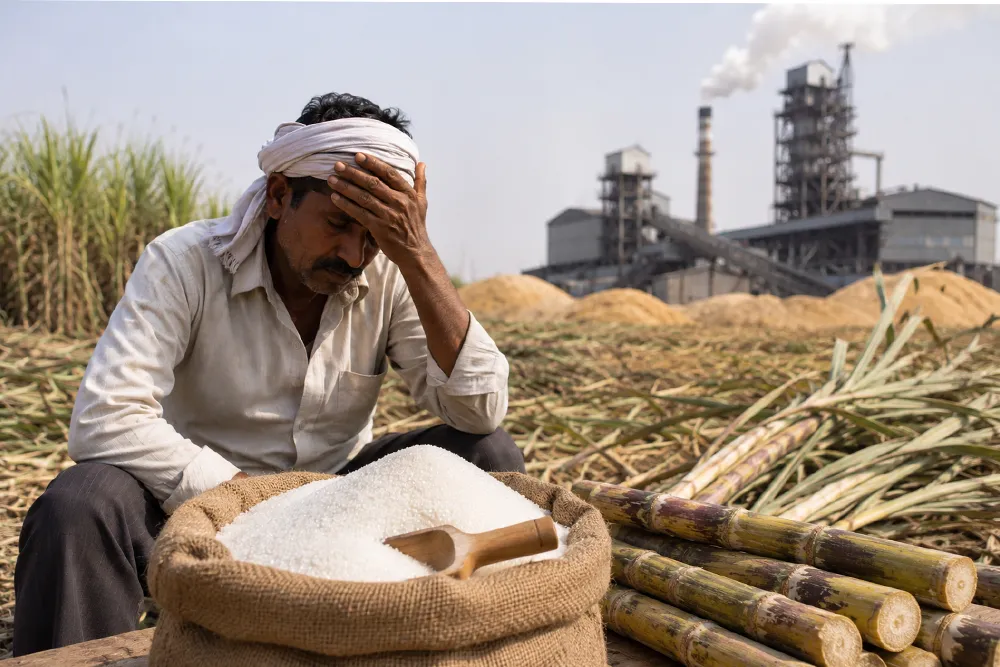
India’s sudden sugar export ban has sparked strong reactions from farmer organisations and opposition leaders in major sugar-producing states. Industry Experts warn that the move could increase financial pressure on sugar mills and delay payments to sugarcane farmers in Maharashtra’s cooperative sugar sector.
The government recently imposed restrictions on sugar exports until September 2026 to maintain domestic supply and control rising prices. But, critics argue that the policy reversal has created uncertainty because export approvals had been expanded only a few months earlier. Several mills had already planned shipments and signed international contracts based on earlier export expectations.
Sugar industry leaders say the decision could decrease mill revenues at a time when operational costs are already rising. Farmer groups also fear that delayed cash flow may affect timely payments to sugarcane growers during the upcoming crushing season.
Opposition parties have alleged that the government sent mixed signals to exporters and weakened confidence in the agriculture export policy framework. Experts believe that such long restrictions may also affect India’s reputation in global sugar markets. Notably, the country is one of the world’s largest exporters in terms of sugar.
At the same time, government officials maintain that the temporary ban is necessary due to concerns of lower sugar production, less stocks, and the need to protect domestic consumers from price spikes.