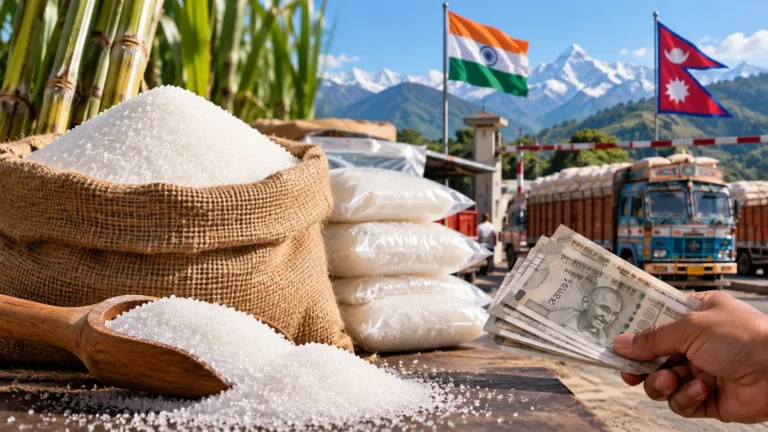
India’s sugar export ban has triggered strong backlash from sugar mills and farmers in Maharashtra, raising concerns over revenue losses, delayed payments to sugarcane growers, and broader uncertainty in the sugar trade.
Industry stakeholders stated that the sudden policy shift has disrupted planning in the sector. Just months earlier, export quotas were expanded, prompting traders and mills to sign international contracts. The abrupt reversal has now left many exporters facing contractual uncertainty and potential financial penalties. Sugar mill associations warn that the ban could reduce revenues at a time when operational costs are high. They also fear that less cash flow may directly impact timely payments to farmers during the ongoing sugarcane procurement cycle.
Farmers have these concerns, stating that delayed payments could increase financial stress in rural areas dependent on sugarcane cultivation. Maharashtra’s cooperative sugar sector, one of the largest in the country, is expected to be particularly affected by the decision.
Government officials, however, maintain that the export restrictions on sugar are necessary to stabilise domestic supply and prevent price spikes. The move comes amid concerns over lower sugar production levels and possible disruptions linked to El Niño weather conditions, which could impact crop yields.
According to Policy experts, while the government’s priority is domestic food security, frequent changes in agriculture export policy can create uncertainty in global commodity markets and affect India’s credibility as a reliable supplier. As the debate continues, the sugar sector is closely watching whether the ban will remain in place or be recalibrated in response to market conditions.