


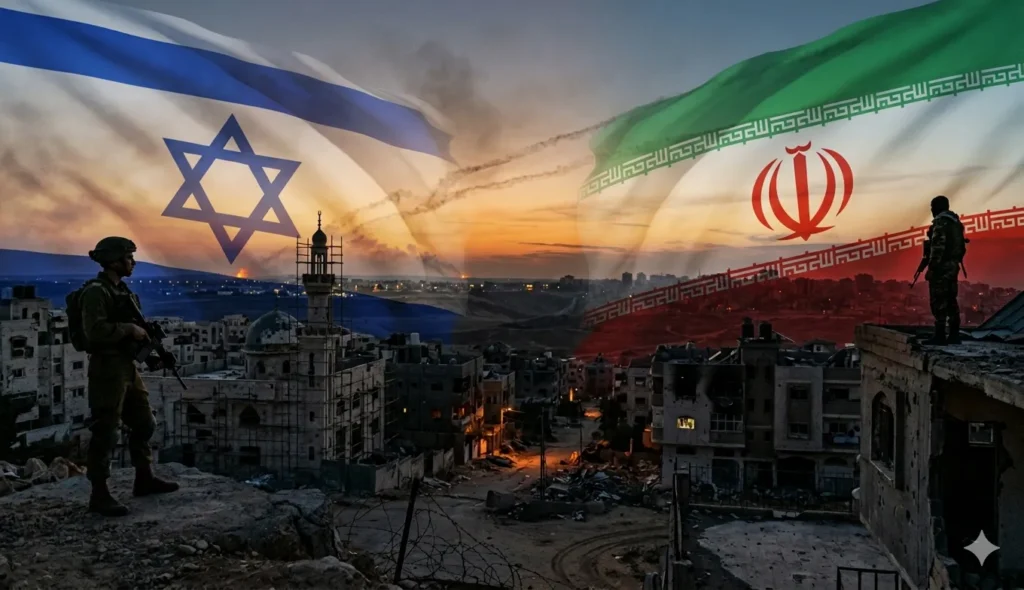
The Iran-Israel War 2026 is not just a sudden escalation—it is the result of decades of hostility, strategic rivalry, and unresolved geopolitical tensions. What unfolded over the past 39 days reflects a deeper story, one that stretches back to the 1979 Islamic Revolution in Iran and continues through proxy wars, nuclear ambitions, and fragile diplomacy.
To understand today’s ceasefire, one must go back to a time when Iran and Israel were not enemies. Before 1979, both nations shared diplomatic and economic ties. However, the Islamic Revolution transformed Iran into a theocratic state under Ayatollah Khomeini, who declared Israel an adversary and reshaped Iran’s foreign policy around its opposition.
Iran-Israel War 2026: The Historical Roots of the Conflict
The origins of this crisis are deeply tied to the Middle East conflict timeline, including the Iran-Iraq War (1980–1988), which left Iran isolated and deeply distrustful of global powers. This war also pushed Iran to invest heavily in its Iran nuclear program, aiming for deterrence and self-reliance.
Over time, Iran built a network of proxy groups—Hezbollah in Lebanon, Hamas in Gaza, and others—forming what it calls the “Axis of Resistance.” This network has been central to its long-term strategy against Israel and the United States.
The Road to 2026: Escalation and Retaliation
Tensions escalated sharply after the October 7, 2023 Hamas attack on Israel, which triggered a broader regional conflict. Iran-backed groups intensified attacks, while Israel responded with military force across multiple fronts.
By 2025, the situation worsened when Israel launched strikes on Iran’s nuclear facilities, leading to a brief but intense “Twelve-Day War.” Though a ceasefire followed, the conflict never truly ended.
The breaking point came on February 28, 2026, when the United States and Israel launched joint airstrikes targeting Iran’s top leadership, including Supreme Leader Ali Khamenei. This marked a dramatic escalation, pushing the region into full-scale confrontation.
39 Days of War and the Strait of Hormuz Crisis
What followed was a devastating 39-day conflict. Iran retaliated with missile and drone attacks on Israel, US bases, and Gulf nations. One of the most critical developments was the Strait of Hormuz crisis, as Iran temporarily shut down this vital oil route.
The impact was immediate. Global oil markets were shaken, triggering a global oil price surge from around $72 per barrel to nearly $120. Supply chains were disrupted, and Gulf nations faced severe economic and infrastructure damage.
The war spread beyond borders. Lebanon, Iraq, and Gulf countries experienced casualties and infrastructure destruction. Water shortages, energy crises, and displacement affected millions across the region.
A Fragile Pause: US-Iran Ceasefire 2026
After weeks of intense fighting, diplomatic intervention—particularly from Pakistan—helped bring both sides to the table. On April 8, 2026, a temporary agreement was reached, marking the US-Iran ceasefire 2026.
Under this deal, Iran agreed to reopen the Strait of Hormuz and allow limited safe passage for oil shipments. In return, the United States paused its military operations for two weeks. However, this ceasefire remains fragile.
Both sides have maintained strong rhetoric. Iran has made it clear that its forces remain ready, while Israel has insisted that the ceasefire does not resolve the nuclear issue. The United States, meanwhile, has framed the pause as a strategic success.
Global Impact: Beyond the Battlefield
The consequences of the Iran-Israel War 2026 extend far beyond the region. Energy markets, global trade, and food security have all been affected.
The temporary closure of the Strait of Hormuz disrupted nearly 20% of global oil supply. Fertiliser exports were impacted, food prices surged, and global GDP projections were revised downward. Countries like India, heavily dependent on Gulf energy routes, faced rising fuel costs and logistical disruptions.
The Big Picture: What Lies Ahead
The Iran-Israel War 2026 is a reminder that Middle East tensions rarely end—they pause. This ceasefire is not a resolution but a window for negotiation.
Key questions remain unanswered: What will happen to Iran’s nuclear program? Will international inspections resume? How long will the Strait of Hormuz remain open? And most importantly, can diplomacy succeed where decades of conflict have failed?
As negotiations move to Islamabad, the world watches closely. The next two weeks could determine whether this pause leads to lasting peace—or another cycle of escalation.
For now, the war may have paused, but the story is far from over. The Iran Israel War 2026 continues to shape the future of global geopolitics, reminding us that history, once set in motion, rarely stops at a ceasefire.