
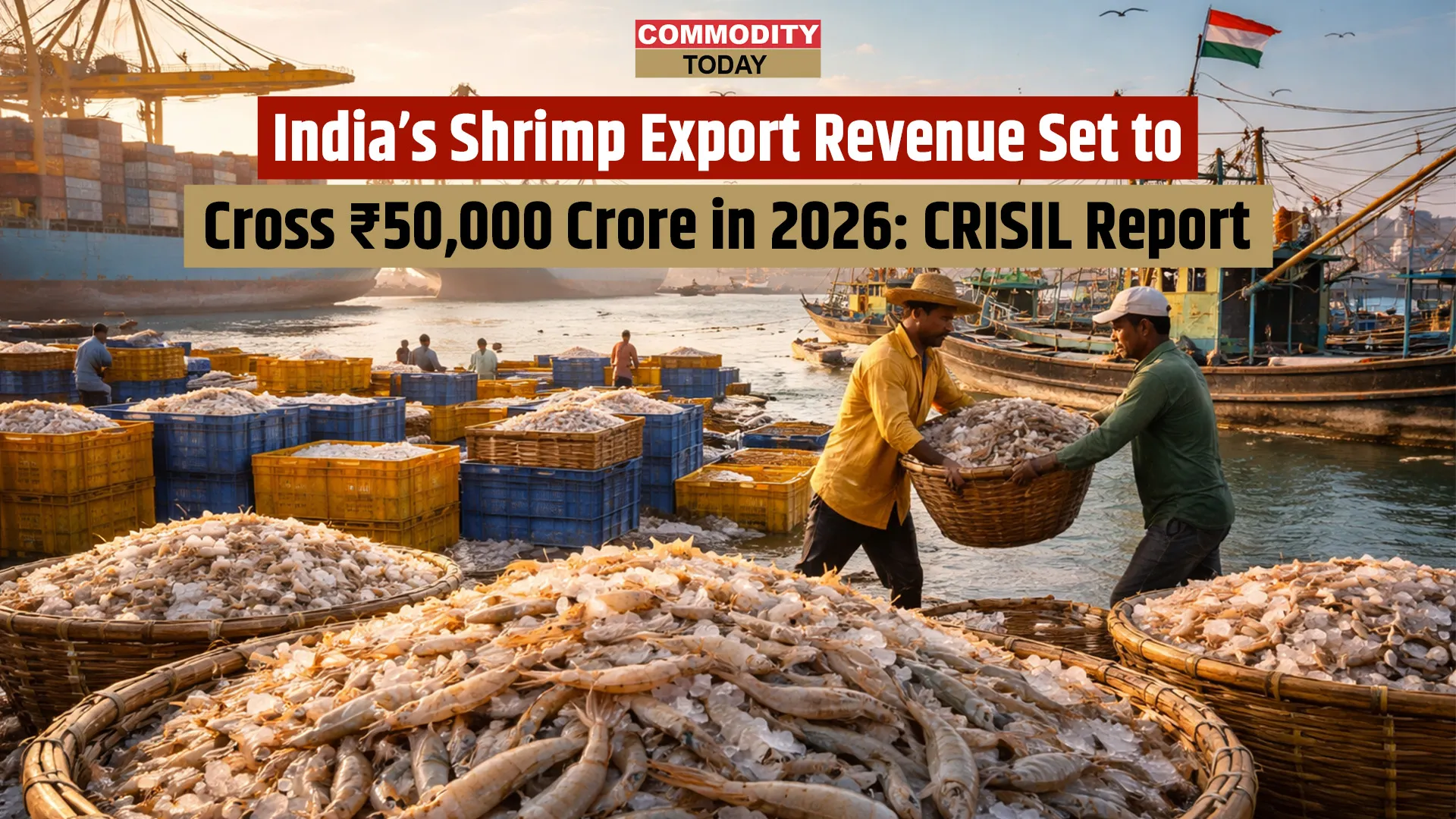
India’s shrimp export industry is poised for a significant rebound in the current fiscal year, with revenues expected to surpass ₹50,000 crore, according to a recent Crisil Ratings report. This marks a 13–15% year-on-year growth after three consecutive years of stagnation, reflecting the resilience and adaptability of the country’s seafood sector.
Despite challenges such as high tariffs in the United States, Indian shrimp exporters have successfully diversified into new international markets. Strategic expansion into regions beyond traditional buyers has enabled exporters to sustain revenue growth. Additionally, the weaker Indian rupee has improved realisations in foreign currency, further supporting export earnings.
While exports to the US have seen some decline due to trade barriers, overall shrimp export volumes have risen, demonstrating strong global demand for Indian shrimp. Healthy operating margins and stable credit profiles for exporters indicate that the industry is well-positioned to navigate global trade uncertainties.
The Crisil report also highlights the importance of market diversification and trade agreement access for sustaining growth in India’s seafood sector. By tapping emerging markets and leveraging bilateral trade agreements, Indian exporters can reduce dependency on a few key markets and mitigate the risks posed by geopolitical tensions or tariffs.
Industry experts expect that continued investment in quality, processing infrastructure, and cold chain logistics will further enhance India’s competitiveness in the global shrimp market. With rising demand in Europe, Southeast Asia, and the Middle East, Indian shrimp exports are likely to maintain steady growth in the coming years, creating opportunities for producers, exporters, and allied sectors.
Overall, India’s shrimp export sector demonstrates a robust recovery, backed by strategic diversification, favorable currency dynamics, and resilient operational performance. The anticipated revenue milestone of ₹50,000 crore underscores the sector’s potential as a key driver of India’s agri-export economy in 2026.