


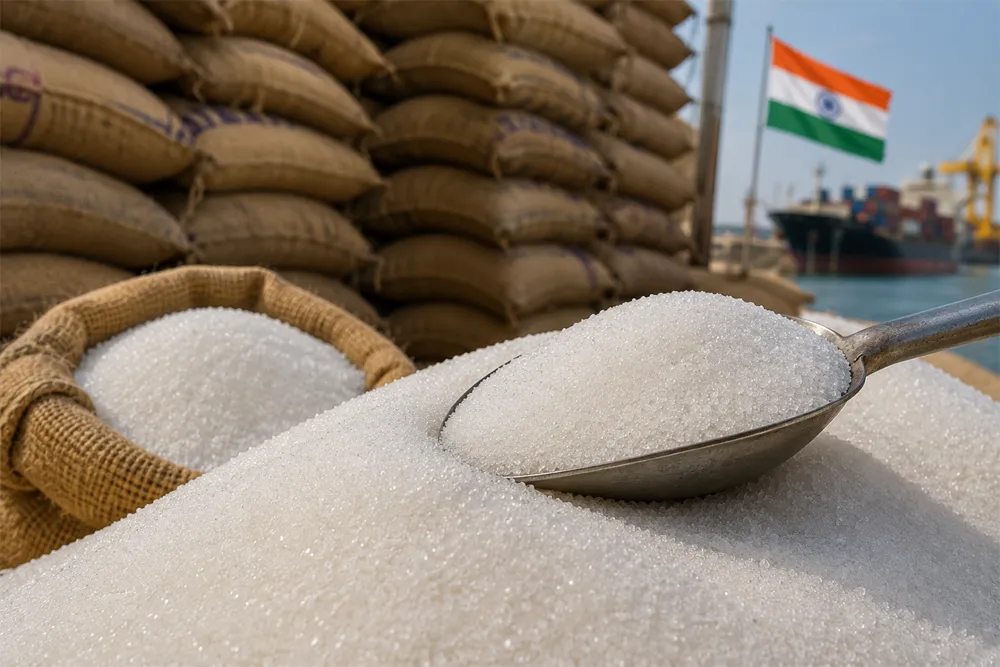
The Indian Government has imposed an immediate ban on the export of raw, white, and refined sugar until September 2026 in a major move aimed at stabilising domestic prices and ensuring adequate local availability. The decision comes at a time when concerns over lower sugar production and tightening stock levels are increasing across the country.
According to reports, weak sugarcane yields, changing weather conditions, and climate-related risks have affected overall production, forcing authorities to prioritise domestic supply over exports. The government believes the move will help control inflation in the sugar market and protect consumers from further price hikes.
The sugar export ban is expected to significantly affect global sugar trade, as India remains one of the world’s largest sugar producers and exporters. Industry experts say reduced exports from India could tighten global supply and influence international sugar prices in the coming months.
However, the government has allowed limited shipments under existing EU and US quota agreements. Sugar consignments that are already in transit will also continue to move forward, providing some relief to exporters.
The latest decision has sparked discussions among traders, exporters, and commodity analysts regarding the future of India’s sugar industry, commodity market, and agri exports. While the move may help stabilise domestic availability, exporters are concerned about potential losses and declining global competitiveness.
The development highlights the growing impact of weather uncertainty and supply chain pressures on India’s agricultural and commodity sectors.