
India-New Zealand Free Trade Agreement to Boost Agricultural Cooperation
India-New Zealand Free Trade Agreement to Boost Agricultural Cooperation
India and New Zealand are moving closer to boosting economic and agricultural ties through a proposed Free Trade Agreement. According to reports, India and New Zealand elevated their bilateral relationship to a Strategic Partnership and set an ambitious target of doubling two-way trade in goods and services to NZ$7 billion (around ₹35,000 crore) by 2030, amid the bilateral talks between PM Narendra Modi and his New Zealand counterpart Christopher Luxon in Auckland.
A joint statement issued on Saturday stated that the two leaders endorsed the India-New Zealand Strategic Partnership: Roadmap to 2030, which will guide bilateral cooperation in the political, economic, defence, security, education and people-to-people ties over the next four years.
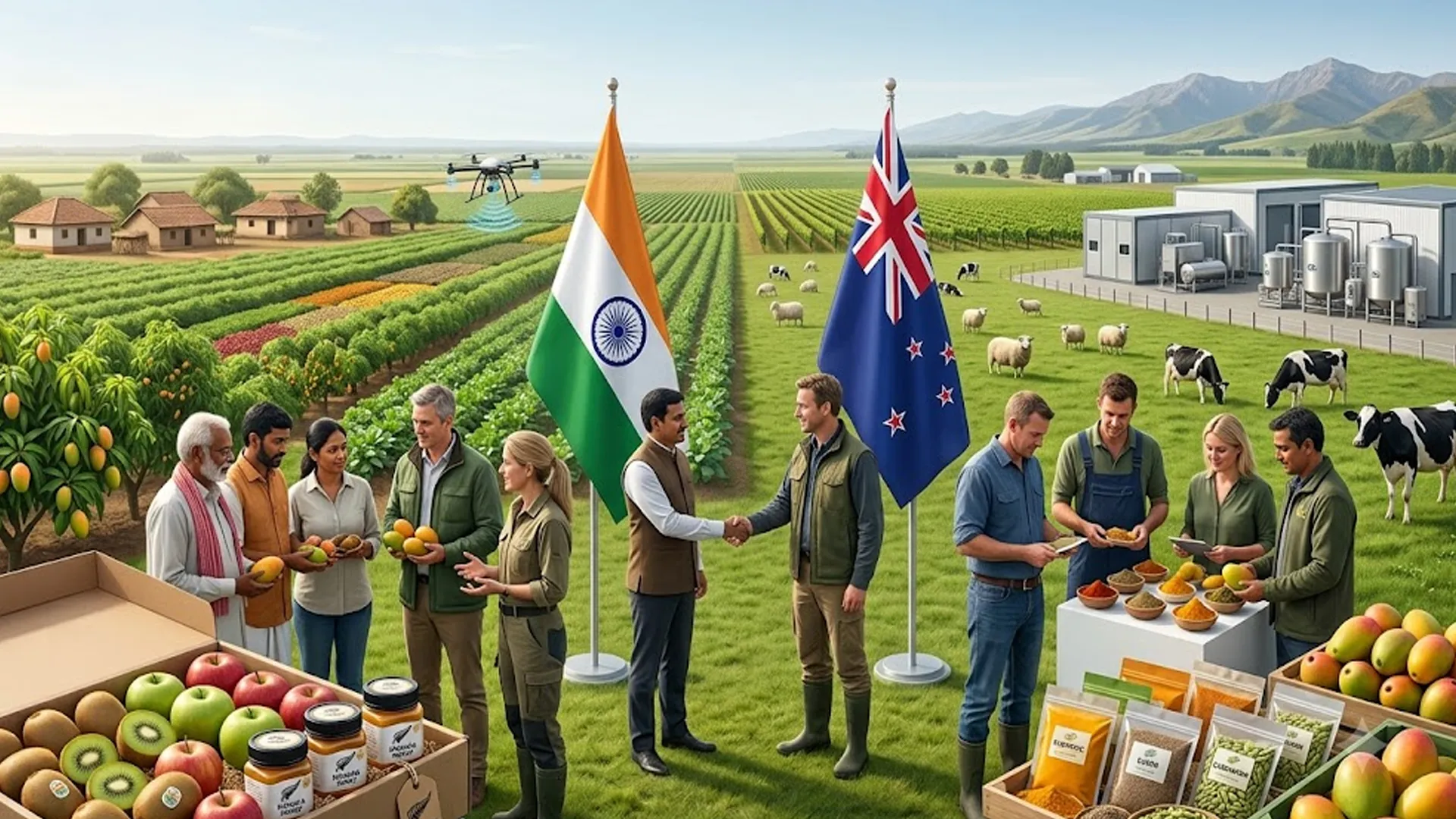
The India-New Zealand Free Trade Agreement is expected to improve collaboration in agricultural research, innovation, food processing, dairy, horticulture, and sustainable farming. By promoting the exchange of modern farming technologies and best practices, the pact could contribute to improving productivity and competitiveness in the Indian agricultural sector.
According to Industry experts, the agreement will also boost bilateral relations by reducing trade barriers, encouraging investment, and creating a more predictable business environment. Enhanced cooperation could help both nations diversify export markets, along with increasing opportunities for agricultural products, processed foods, and agri-tech solutions.
On the global level, Free Trade Agreements have become a significant medium for boosting economic growth, increasing exports, and improving supply chain resilience. The proposed India-New Zealand FTA aligns with India’s broader strategy of expanding international trade partnerships while supporting domestic agriculture and rural development. For Indian farmers and exporters, the agreement could offer easier access to New Zealand’s market, whereas New Zealand could benefit from stronger engagement with one of the world’s fastest-growing economies. In addition, the partnership is expected to promote knowledge sharing in climate-resilient agriculture, food security, and sustainable farming practices.